What Is Autolyse? Method, Timing, and When to Skip It
⚡ What You’ll Learn in 60 Seconds
- Traditional method: Mix flour and water, rest, then add salt and leavening.
- What changes: Flour hydrates while gluten development and enzyme activity begin.
- Starting time: About 20-60 minutes for many wheat doughs; follow the formula for longer rests.
- Variations: A liquid starter may be included when the remaining water cannot hydrate the flour.
- Key insight: Autolyse is optional and does not improve every dough.
↓ Full 10-min guide with timing guidance, step-by-step process, autolyse vs fermentolyse, and when to skip it
Autolyse is traditionally a short rest of flour and water before salt and leavening are mixed in. It can make some wheat doughs smoother or more extensible and reduce later mixing, but it does not replace every mixing method or guarantee better bread.
The simplest useful test is to compare the same wheat formula with and without a short autolyse while keeping dough temperature, mixing, and fermentation consistent. Judge dough extensibility and required mixing first; crumb openness is influenced by many later steps.
The method is easy to describe, but ingredient order matters. A traditional autolyse is flour plus water. Once starter or yeast is added, fermentation is already underway, and once salt is included, the rest no longer matches the strict traditional definition. Practical formulas may still use those variations successfully.
Use autolyse when it solves a problem in the formula: hydration, extensibility, or mixing efficiency. Skip it when the recipe, flour, or schedule does not benefit.
What Autolyse Actually Is
The traditional method and practical exceptions
Autolyse is a French baking technique with one core idea: mix flour and water together, rest it, then add the rest of the ingredients. The technique was popularized by French baker Raymond Calvel in the 1970s as a way to develop gluten passively, without aggressive kneading.
The basic process:
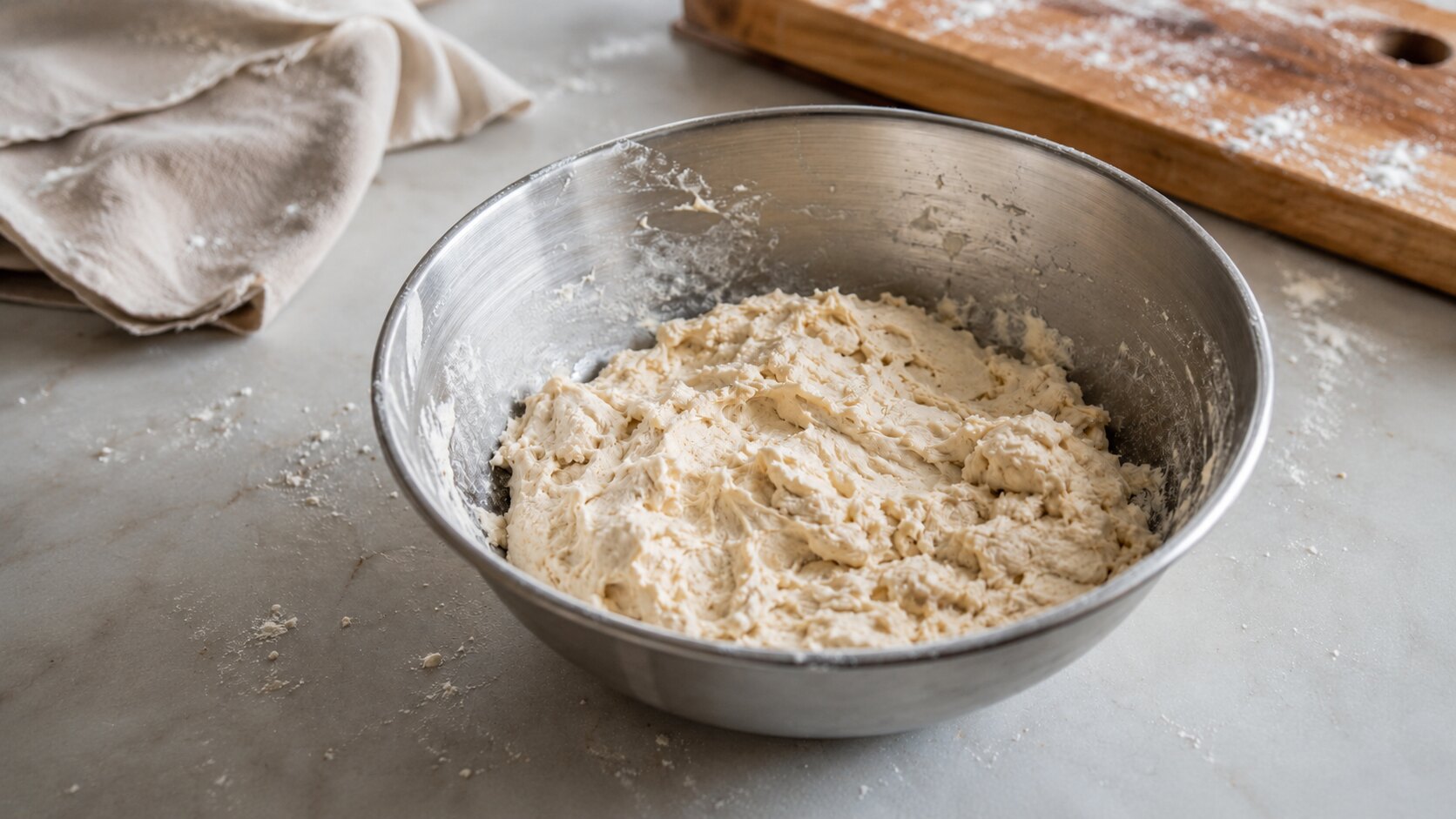
- Mix flour and water until just combined (no dry flour visible): the mixture will look shaggy
- Cover and rest for the time specified by the formula, often 20-60 minutes for wheat dough
- Add salt, yeast or starter, and any other ingredients
- Finish mixing and proceed with the recipe
Traditional autolyse omits salt.
Salt changes dough strength and enzyme activity, so it is held back in the traditional method. Some formulas intentionally use a salted rest; follow their tested process rather than assuming that one ingredient order is mandatory for every bread.
Yeast and starter timing:
The traditional method also holds back yeast or starter. A practical exception arises when a recipe uses a large amount of liquid preferment and the remaining water cannot hydrate the flour adequately. Some bakers include the preferment in that case and treat the rest as a modified autolyse or fermentolyse.
Traditional autolyse = flour and water, a rest, then the remaining ingredients. Variations can work, but name and evaluate them in the context of the full formula.
Why Autolyse Works (The Science)
Two processes happening simultaneously during the rest
Two relevant processes begin as soon as flour meets water.
1. Passive gluten development
Gluten is a protein network formed by two proteins in flour: glutenin (which provides elasticity) and gliadin (which provides extensibility). When flour and water mix, these proteins start hydrating and linking into a network. Kneading speeds this up by mechanically aligning the proteins, but the linking happens on its own given enough time.
After a short rest, many wheat doughs feel smoother and more cohesive than immediately after mixing. The effect depends on flour and hydration.
2. Enzymatic activity
Flour contains naturally occurring enzymes that activate when water is added:
- Proteolytic activity can reduce resistance and increase extensibility over time
- Amylase activity converts some starch into sugars used during fermentation and browning
Their activity depends on flour, temperature, hydration, acidity, and time. This is one reason an excessively long rest can weaken some doughs.
Why traditional autolyse holds back salt:
Salt changes dough strength and can moderate some enzyme activity. Omitting it creates the conditions associated with the traditional technique, but salt does not stop flour hydration or remove every possible benefit of a rest.
For a meaningful comparison, split one formula and keep total fermentation, dough temperature, mixing energy, and handling as close as possible. Evaluate extensibility and mixing time before attributing crumb differences to autolyse.
How Long to Autolyse
A conservative starting range
Autolyse time depends on flour, temperature, hydration, and the goal of the formula. For many wheat breads, 20-60 minutes is a sensible first range. Do not average arbitrary times for a blend or assume that protein percentage makes an overnight rest safe.
Why longer for whole grain:
Whole-grain wheat contains bran and germ, which change water absorption and can benefit from hydration time. The appropriate rest still depends on flour strength and the rest of the formula; longer is not automatically better.
Why shorter for rye:
Rye structure relies heavily on pentosans and starch rather than a wheat-like gluten network, and rye flour can have high enzyme activity. For rye-heavy sourdough, skip autolyse or use only the short rest specified by a tested rye formula.
Long autolyse:
Extended rests exist, but they are not a default recommendation. Flour enzymes continue working and the dough can become weak, sticky, or difficult to mix. Refrigeration changes but does not eliminate that risk. Use a long autolyse only when a tested formula specifies the flour, temperature, hydration, and duration.
For a first comparison with a wheat dough, start around 30 minutes and keep the rest of the process unchanged.
Step-by-Step Autolyse Process
How to follow an autolyse formula
The safest approach is to use a recipe written with autolyse. Adding one can change dough temperature, ingredient incorporation, and fermentation timing, especially when preferment contains much of the formula’s water.
The standard process:
Step 1: Mix flour and water
Combine all the flour from the recipe with all (or most) of the water. Stir or hand-mix until no dry flour remains. The mixture will look shaggy and rough: that’s correct. Don’t try to develop the dough or knead it.
Step 2: Cover and rest
Cover the bowl so the surface does not dry. Rest at the temperature and for the time specified by the formula. Many wheat formulas use 20-60 minutes.
Step 3: Add salt and starter (or yeast)
After the rest, add salt and starter or yeast in the amounts given by the recipe, along with any held-back water.
Step 4: Mix to incorporate
Mix until the remaining ingredients are evenly distributed and the dough reaches the development required by the formula. Use the mixing method specified by the recipe.
Step 5: Continue with the recipe normally
From here, follow the formula’s bulk fermentation, folds, shaping, and proofing. Count fermentation from the point at which leavening was introduced; in a fermentolyse, that is before the rest ends.
Withholding water (bassinage):
Some bakers hold back part of the water and add it later, a technique often called bassinage. The amount depends on the formula. If too much water is withheld, the flour may not hydrate evenly during the rest.
Track Your Bakes With and Without Autolyse
Autolyse may help one formula and add little to another. Compare the same formula with consistent mixing, temperature, and fermentation before drawing a conclusion.
What Flourwise gives you for technique testing:
- Built-in journal: log every bake with photo, technique notes, and result
- Recipe calculator handles baker’s percentage automatically: work in grams, see hydration live
- Step-by-step baking mode with timers for autolyse, folds, and rests
Photos and process notes make side-by-side technique tests easier to interpret.
Autolyse vs Fermentolyse
Related labels with a different ingredient order
The term fermentolyse is commonly used for a related rest in which starter or levain is already present. Usage varies between bakers, so the ingredient list matters more than the label.
Pure autolyse:
- Flour + water only during rest
- Salt AND starter added after the rest
- Fermentation has not started from added leavening
- Original Calvel method
Fermentolyse:
- Flour + water + starter during rest
- Salt added after the rest
- Fermentation begins during the rest period
- A practical variation used in many sourdough formulas
Side-by-side comparison:
| Property | Autolyse | Fermentolyse |
|---|---|---|
| Includes starter? | No | Yes |
| Includes salt? | No | No |
| Fermentation clock | Starts after the rest | Starts as soon as starter is mixed in |
| Ingredient incorporation | Starter added later | Starter already distributed |
| Main tradeoff | Separate hydration rest | Simpler mixing, but fermentation is underway |
Which to use:
Choose the method specified by the formula. Fermentolyse can simplify incorporation, especially when a liquid starter contains water needed to hydrate the flour. Traditional autolyse keeps leavening out of the rest. Their results are not guaranteed to be identical.
For commercial-yeast bread, a traditional autolyse holds back both yeast and salt. Other rests may include one or both ingredients, but should be evaluated as part of that formula.
Autolyse and fermentolyse are ingredient-order choices, not a universal quality ranking. Follow the formula and count fermentation from the moment starter or yeast enters the dough.
When to Skip Autolyse
Cases that need a formula-specific approach
Autolyse is optional. These situations deserve extra caution or a formula designed around a different mixing method.
Use caution or skip unless the formula includes it when:
- The recipe is enriched: brioche, panettone, and milk bread often use mixing sequences designed around sugar, eggs, fat, and dairy.
- The dough is very stiff: there may not be enough free water for an even flour-and-water rest.
- The formula already uses intensive mixing: autolyse may be redundant or may alter the intended schedule.
- The recipe was not designed for the extra time: adding a rest can shift dough temperature and fermentation.
- The dough is rye-heavy: skip autolyse unless a tested rye formula specifically includes one.
Conversely, autolyse is most useful when:
- Wheat dough that needs more extensibility
- Whole-grain wheat formulas that benefit from extra hydration time
- Formulas designed to reduce later mixing
A practical way to judge whether it helps your bread is to compare repeated bakes of the same formula.
Common Autolyse Mistakes
The errors that defeat the technique
Mistake 1: Calling every dough rest an autolyse
Traditional autolyse contains flour and water. A rest with salt or leavening may still be useful, but it is a different process. Record what is actually in the dough.
Mistake 2: Autolysing too long
Extended rests can make some flours slack and sticky well before a universal deadline. Use 20-60 minutes as a conservative wheat-dough starting range and use longer times only when the formula supports them.
Mistake 3: Using too little water
The flour-water mixture needs enough water to combine evenly. This is especially important when a liquid preferment contains a large share of total water. Do not impose one percentage; follow the formula’s bassinage plan.
Mistake 4: Trying to develop the dough during autolyse
Mix until the flour is hydrated as directed, cover, and leave it for the specified rest. Additional kneading turns it into a different mixing process.
Mistake 5: Assuming every whole-grain flour needs a long rest
Whole-grain wheat can benefit from hydration time, but enzyme activity and flour strength vary. Rye-heavy dough is a separate case and may be harmed by a long autolyse. Use a formula written for the grain blend.
Conclusion: A Short, Optional Tool
Autolyse is a simple option in a bread formula: mix flour and water, rest, then add the remaining ingredients. In some wheat doughs it improves hydration, extensibility, or mixing efficiency. In others, the difference is small or the method is unsuitable.
The technique is optional, and bread without autolyse can be excellent. The rest adds elapsed time and changes the process even if it adds little hands-on work.
For a first test, choose a wheat formula compatible with autolyse and use a 30-minute rest. Keep other variables stable and compare dough feel and required mixing with the same recipe made as written.
Quick Reference
- Traditional autolyse = flour + water mixed and rested before adding salt and starter/yeast
- Traditional autolyse holds back salt and leavening; some formulas use intentional variations.
- About 20-60 minutes is a conservative starting range for many wheat doughs.
- Long autolyse is formula-specific and can weaken some flours.
- Hydration, gluten development, and flour-enzyme activity begin during the rest.
- Fermentolyse usually includes starter, so fermentation has already started.
- Be cautious with enriched, very stiff, and rye-heavy doughs.
- Compare one formula with and without the rest before assuming a benefit.
Frequently Asked Questions
What is autolyse in bread baking?
Traditional autolyse is a rest after flour and water are mixed, before salt and leavening are added. It allows flour to hydrate and gluten development and flour-enzyme activity to begin with little mixing. A liquid preferment or starter may need to be included when the remaining water is not enough to hydrate the flour; that is a practical variation rather than the strict two-ingredient method.
How long should autolyse be?
About 20-60 minutes is a practical starting range for many wheat breads. Whole-grain wheat may benefit from more hydration time, but flour strength and enzyme activity matter, so longer is not automatically better. Avoid treating an overnight flour-and-water rest as a default; extended rests can make some doughs weak or sticky. Follow a tested formula, and keep rye-heavy sourdough rests short or skip autolyse unless the formula specifically calls for one.
Do I need to autolyse for sourdough?
No. Autolyse is optional, and excellent sourdough can be made without it. It can improve hydration, extensibility, or mixing efficiency in some wheat formulas, but it does not guarantee a more open crumb or easier shaping. Use the method specified by a tested recipe before adding a separate rest on your own.
What’s the difference between autolyse and fermentolyse?
Traditional autolyse rests flour and water before adding salt and leavening. The term fermentolyse is commonly used for a rest that already includes starter or levain, usually with salt added later, so fermentation has begun. Bakers use both terms inconsistently, and neither method is universally better. Follow the ingredient order and timing in the formula you are using.
Why does autolyse work?
Once flour meets water, proteins hydrate and a gluten network begins to form, while flour enzymes become active. The rest can make some wheat doughs smoother, more extensible, and quicker to mix afterward. Traditional autolyse omits salt and leavening, but the size of the benefit depends on flour, hydration, mixing method, and the complete formula.