Cups to Grams Converter
Stop guessing, start weighing. Convert cups to grams and grams to cups for flour, sugar, butter, milk and 15 common baking ingredients, including 1 cup flour, 1 cup sugar, 2 cups flour and 3 cups flour.
Cups to Grams Conversion Table
All weights are for the US customary cup (240 ml) using the spoon-and-level method. Brown sugar is packed.
| Ingredient | 1 Cup (g) | ½ Cup (g) | ⅓ Cup (g) | ¼ Cup (g) |
|---|---|---|---|---|
| All-purpose flour | 120 | 60 | 40 | 30 |
| Bread flour | 120 | 60 | 40 | 30 |
| Whole wheat flour | 113 | 57 | 38 | 28 |
| Cake flour | 115 | 58 | 38 | 29 |
| Granulated sugar | 200 | 100 | 67 | 50 |
| Brown sugar (packed) | 213 | 107 | 71 | 53 |
| Powdered sugar | 113 | 57 | 38 | 28 |
| Butter | 227 | 113 | 76 | 57 |
| Milk | 245 | 123 | 82 | 61 |
| Water | 240 | 120 | 80 | 60 |
| Honey | 340 | 170 | 113 | 85 |
| Cocoa powder | 85 | 43 | 28 | 21 |
| Rolled oats | 90 | 45 | 30 | 23 |
| Rice (uncooked) | 185 | 93 | 62 | 46 |
| Salt (table) | 288 | 144 | 96 | 72 |
Spoon-and-level method: Fluff the ingredient, spoon it into the cup, and level off with a knife. Never scoop directly from the bag—that can add 20–30 g of extra flour per cup. 1 US cup = 240 ml.
Save your recipe, set baking timers & track every bake. Try Flourwise free →
Quick Answers: 1 Cup Flour, Sugar, Milk and More
Fast lookups for the cup and gram conversions people search most often. Flour values use all-purpose flour measured with the spoon-and-level method.
| Search | Answer | Note |
|---|---|---|
| 1 cup flour in grams | 120g all-purpose flour | Bread flour is also 120g |
| 2 cups flour in grams | 240g all-purpose flour | 3 cups = 360g |
| 3 cups flour in grams | 360g all-purpose flour | Spoon-and-level method |
| 1 cup sugar in grams | 200g granulated sugar | Packed brown sugar is about 213g |
| 1 cup milk in grams | 240-245g milk | Use 240g for quick recipe conversion |
| 1/2 cup sugar in grams | 100g granulated sugar | Packed brown sugar is about 107g |
| 3/4 cup flour in grams | 90g all-purpose flour | Also written as 0.75 cup |
| 1 1/2 cups flour in grams | 180g all-purpose flour | Also written as 1.5 cups |
| 1.25 cups flour to grams | 150g all-purpose flour | 1 1/4 cups, spoon-and-level |
| 115g flour to cups | 0.96 cup all-purpose flour | About 1 cup; cake flour is exactly 1 cup here |
For bread and sourdough, grams are safer than cups because hydration depends on the exact flour weight.
1½, 2 & 3 Cups to Grams
Larger measurements for recipes that call for more than one cup. All values in grams.
| Ingredient | 1¼ Cup | 1½ Cup | 2 Cups | 2½ Cups | 3 Cups |
|---|---|---|---|---|---|
| All-purpose flour | 150 | 180 | 240 | 300 | 360 |
| Bread flour | 150 | 180 | 240 | 300 | 360 |
| Granulated sugar | 250 | 300 | 400 | 500 | 600 |
| Brown sugar (packed) | 266 | 320 | 426 | 533 | 639 |
| Butter | 284 | 340 | 454 | 567 | 681 |
| Milk | 306 | 368 | 490 | 613 | 735 |
| Water | 300 | 360 | 480 | 600 | 720 |
| Honey | 425 | 510 | 680 | 850 | 1020 |
Why Professional Bakers Weigh in Grams, Not Cups
Precision makes the difference between a good bake and a great one
Cups measure volume, but baking is a science that depends on weight. The same cup of flour can weigh anywhere from 120 g to 160 g depending on how you scoop it, how long the bag has been sitting, and even the humidity in your kitchen.
That means three cups of flour can be off by up to 120 g—enough to turn a soft, airy loaf into a dense brick, or make your cookies spread into flat discs instead of holding their shape.
Professional bakeries around the world use grams (and baker’s percentage) because it eliminates this guesswork entirely:
- Density varies by ingredient. A cup of honey (340 g) weighs almost three times as much as a cup of cocoa powder (85 g). Volume tells you nothing about actual quantity.
- Scooping adds 20–30 g per cup. Even careful bakers get inconsistent results with cups because the flour compresses differently every time you dip the cup into the bag.
- Baker’s percentage requires weight. The system that professional bakers use to scale and adjust recipes—expressing every ingredient as a percentage of flour weight—only works with grams or ounces, never cups.
- Scaling is effortless. Need to double a recipe? Multiply gram weights by 2. With cups, you’re dealing with fractions of fractions.
A $10 kitchen scale is the single most impactful upgrade you can make to your baking. Once you switch to weighing, you’ll never go back.
Already weighing in grams? Flourwise builds recipes in grams and baker’s percentage from the start, and you can scale a 500 g dough up to 2 kg with one tap, no cup conversions involved.
Grams to Cups Conversion Chart
Reverse lookup — convert metric recipes to US cups
Following a European or metric recipe and need to know how many cups a gram measurement equals? Use this reverse conversion table. Values are approximate—for best results, use a kitchen scale instead of converting back to cups.
| Ingredient | 100g | 150g | 200g | 250g | 500g |
|---|---|---|---|---|---|
| All-purpose flour | 0.83 | 1.25 | 1.67 | 2.08 | 4.17 |
| Bread flour | 0.83 | 1.25 | 1.67 | 2.08 | 4.17 |
| Granulated sugar | 0.50 | 0.75 | 1.00 | 1.25 | 2.50 |
| Brown sugar (packed) | 0.47 | 0.70 | 0.94 | 1.17 | 2.35 |
| Powdered sugar | 0.88 | 1.33 | 1.77 | 2.21 | 4.42 |
| Butter | 0.44 | 0.66 | 0.88 | 1.10 | 2.20 |
| Milk | 0.41 | 0.61 | 0.82 | 1.02 | 2.04 |
| Cocoa powder | 1.18 | 1.76 | 2.35 | 2.94 | 5.88 |
| Rice (uncooked) | 0.54 | 0.81 | 1.08 | 1.35 | 2.70 |
Values shown in US cups (240 ml). Round to the nearest practical fraction: 0.50 = ½ cup, 0.33 = ⅓ cup, 0.25 = ¼ cup, 0.75 = ¾ cup.
Cups to Grams by Ingredient
Quick answers for the most searched baking conversions
How Many Grams in a Cup of Flour?
One cup of all-purpose flour = 120g. Bread flour = 120g. Whole wheat flour = 113g. Cake flour = 115g. Flour is the ingredient where cup measurements cause the most problems—the difference between spooning and scooping can be 20–30g per cup. In a recipe with 3 cups of flour, that’s up to 90g of error, enough to change your dough hydration by 10% and dramatically affect the texture of your bread.
How Many Grams in a Cup of Sugar?
One cup of granulated sugar = 200g. Brown sugar (packed) = 220g. Powdered sugar = 120g. Sugar is more consistent than flour when measured in cups because the granules don’t compress as easily. However, brown sugar must be firmly packed into the cup—loosely measured, it can weigh 30–40g less.
How Many Grams in a Cup of Butter?
One cup of butter = 227g = 2 US sticks = 8 oz. Half a cup = 1 stick = 113g. This is the most reliable cup conversion because US butter is sold in pre-marked sticks. In Europe, butter is sold in blocks (typically 250g), so 1 cup is slightly less than one European block.
How Many Grams in a Cup of Rice?
One cup of uncooked white rice = 185g. Cooked rice roughly doubles in volume, so 1 cup uncooked yields about 2–2.5 cups cooked (370–460g). Brown rice and basmati rice weigh similarly. For sticky/sushi rice, use about 190g per cup as the grains pack slightly tighter.
How Many Grams in a Cup of Milk or Water?
One cup of water = 240g. One cup of whole milk = 245g (slightly heavier due to fat and protein content). Buttermilk = 245g. Heavy cream = 240g. Liquids are the easiest to measure in cups because they naturally level off, but a kitchen scale is still faster—no meniscus guessing.
How Many Grams in a Cup of Cocoa Powder?
One cup of unsweetened cocoa powder = 85g. Cocoa is extremely light and airy, which makes it one of the trickiest ingredients to measure by volume. Always sift cocoa before measuring in cups—clumps create air pockets that throw off the weight. Or better yet, just weigh it.
Common Cup Sizes Around the World
Not all cups are created equal
One of the biggest sources of confusion in baking is that “one cup” means different things in different countries. If you’re following a recipe from another country, the cup size matters:
| Cup Standard | Volume (ml) |
|---|---|
| US customary cup | 236.6 |
| US legal cup | 240 |
| Imperial cup (UK) | 284 |
| Australian cup | 250 |
| Japanese cup | 200 |
| Metric cup | 250 |
The difference between a Japanese cup (200 ml) and an Imperial cup (284 ml) is over 40%—that’s a massive discrepancy that can ruin a recipe. An Australian recipe calling for “2 cups of flour” expects 260 g, while a US recipe with the same instruction expects 240 g.
This is yet another reason why gram-based recipes travel better across borders. 250 g of flour is 250 g of flour, everywhere in the world.
Frequently Asked Questions
How many grams is 1 cup of flour?
How many grams is 2 cups of flour?
How many grams is 3 cups of flour?
Why do different sources give different cup-to-gram values?
Can I use cups instead of grams for bread baking?
How do I convert a recipe from cups to grams?
What is the most accurate way to measure flour in cups?
Do I need a special scale for baking?
How many grams in 1½ cups of flour?
How many grams is 0.75 cup of flour?
How many grams is 1.25 cups of flour?
How many cups is 115g of flour?
How many cups is 550g of flour?
How many grams is 1 cup of butter?
How many grams is 1 cup of sugar?
How many grams is 1 cup of milk?
How do I convert grams back to cups?
How many cups is 100g of flour?
Related Articles
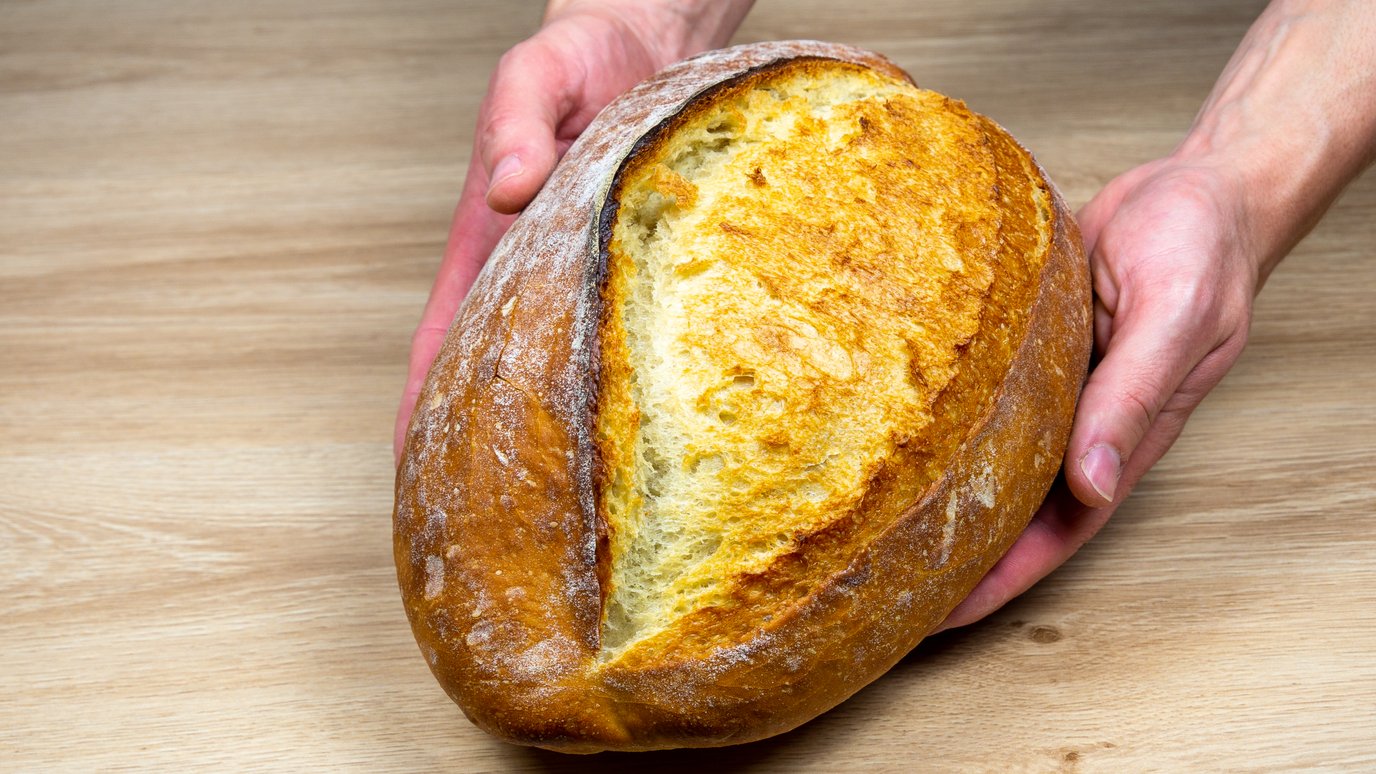 Bread Baking
 No Knead Bread: 4 Ingredients, 10 Minutes
Easy no knead bread recipe with exact gram weights. 65% hydration, overnight cold fermentation, crusty artisan loaf.
Read more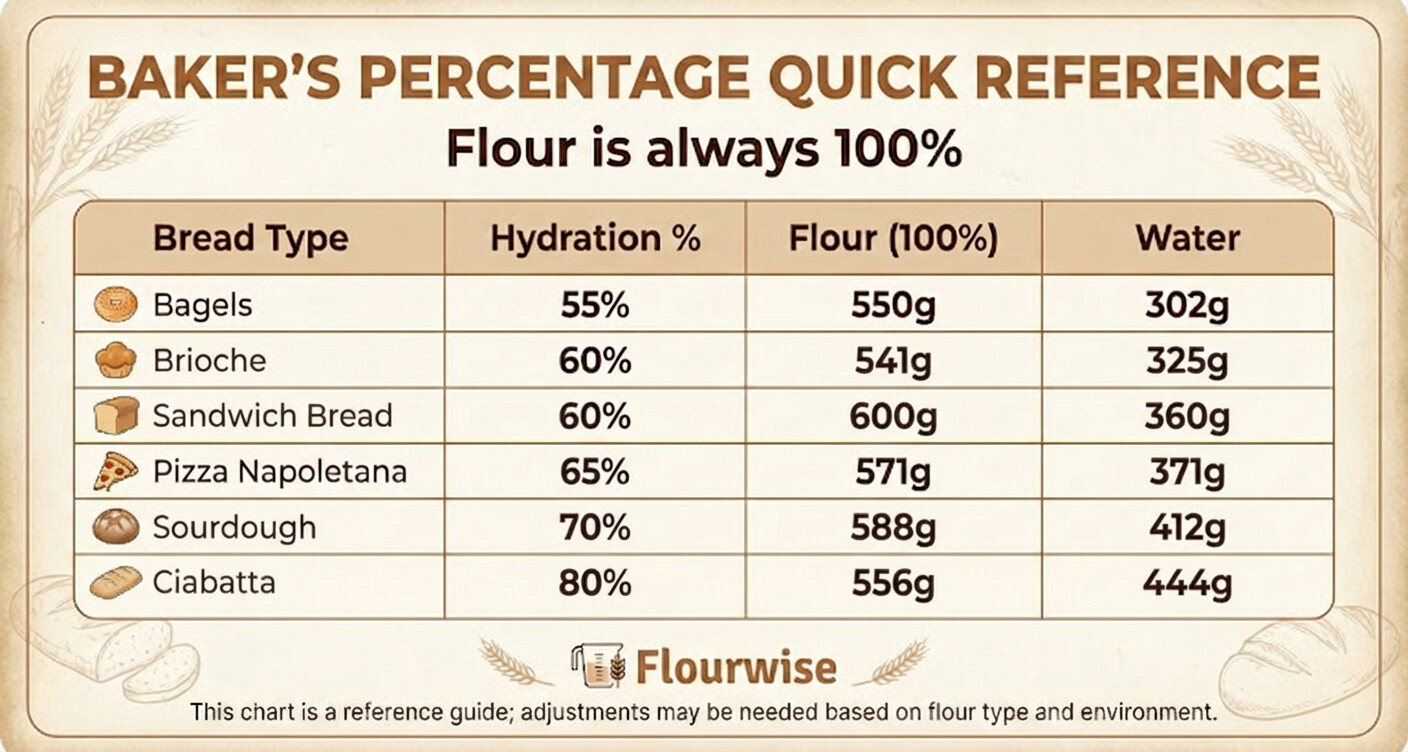 Bread Baking
 Baker's Percentage Chart
Complete reference chart for baker's percentage with common bread formulas, hydration ranges, and ingredient ratios.
Read more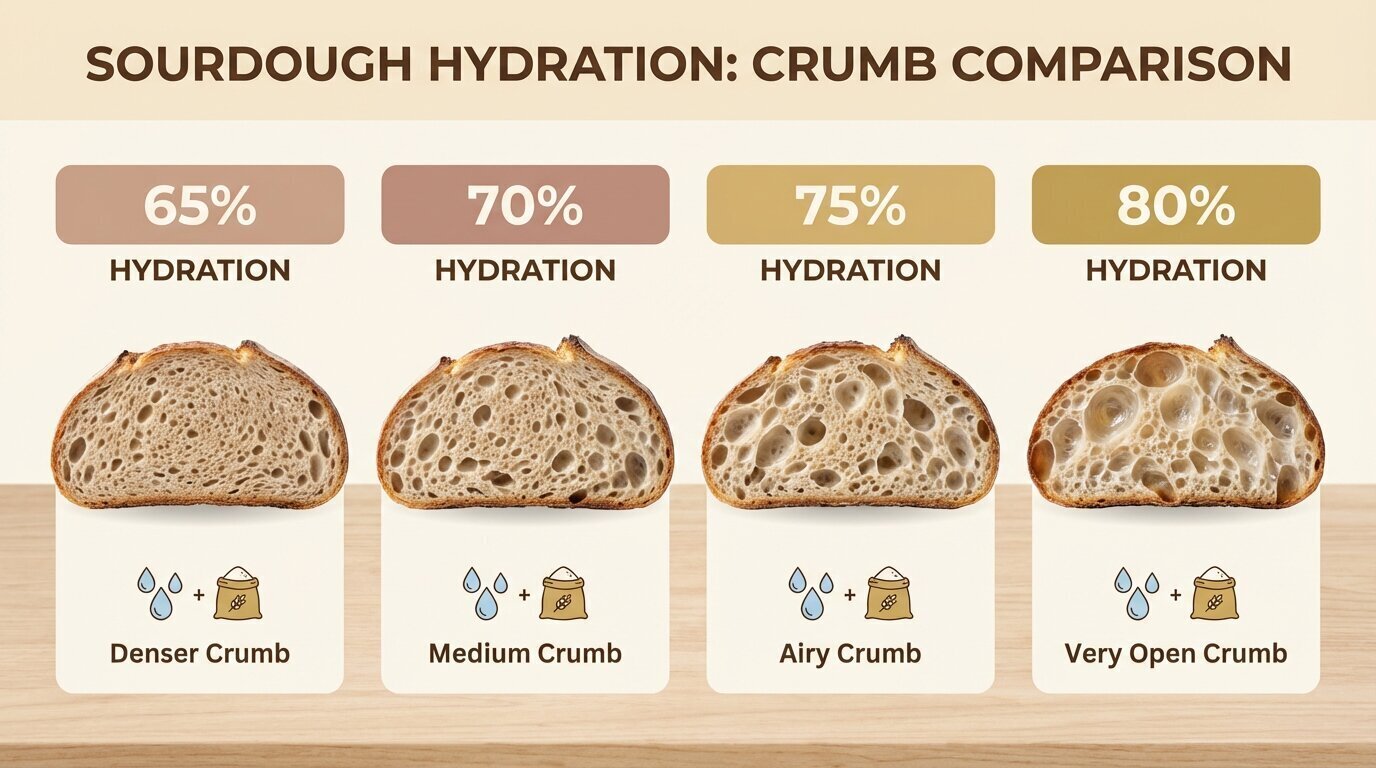 Hydration
 Sourdough Hydration Chart
Visual guide to sourdough hydration levels — what each percentage looks and feels like, from stiff to high-hydration doughs.
Read more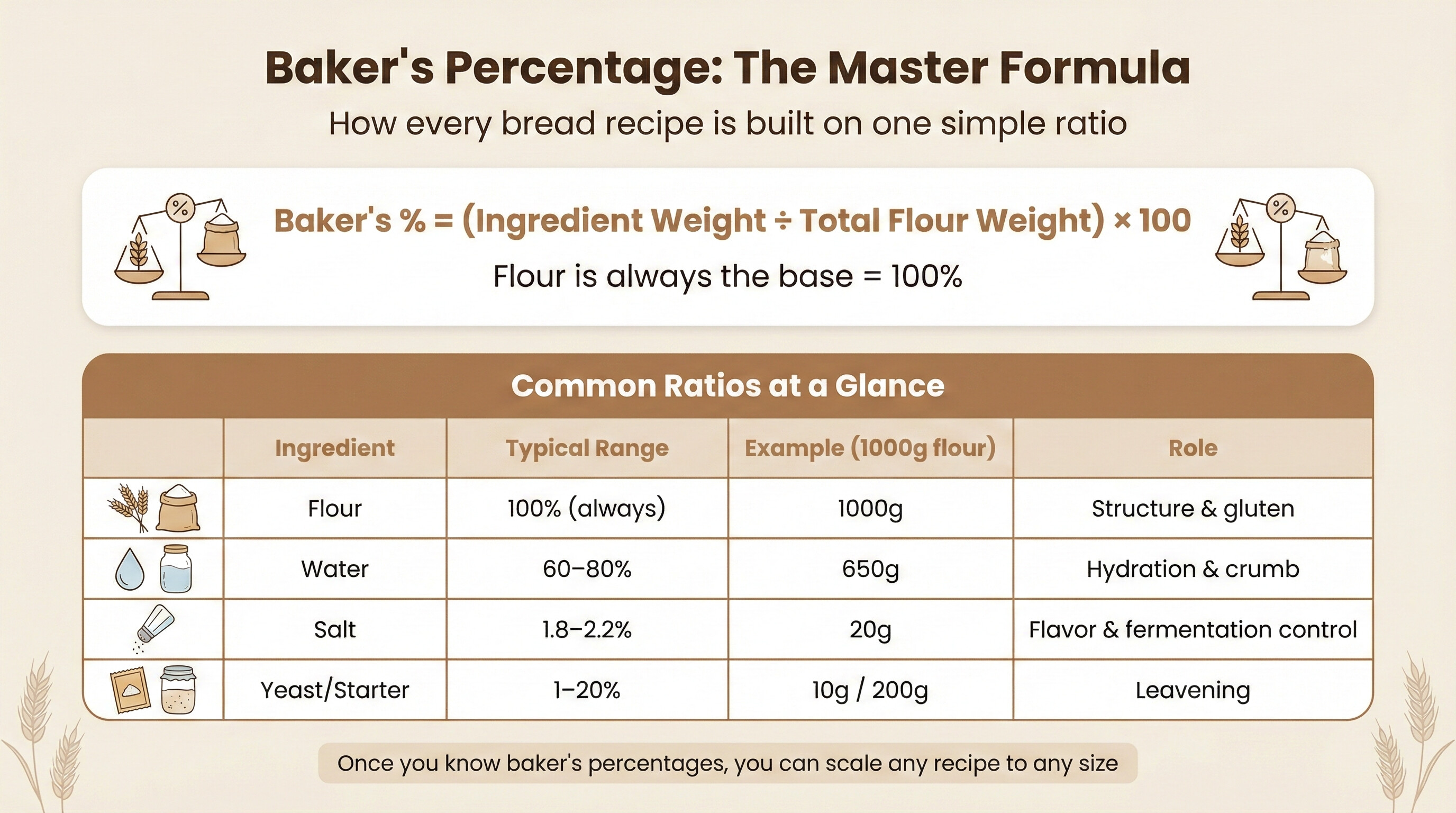 Bread Baking
 How to Calculate Baker's Percentage
Step-by-step guide to converting any recipe to baker’s percentage. The math behind consistent, scalable baking.
Read more