Desired Dough Temperature Calculator
Work out the exact water temperature you need to hit your desired dough temperature. Consistent dough temperature means consistent fermentation, with no more over-proofed or under-proofed loaves.
Enter your desired dough temperature, room and flour temperatures. The required water temperature will appear here.
Save recipes, set baking timers & track every bake. Try Flourwise free →
The DDT Formula
How the water temperature is calculated
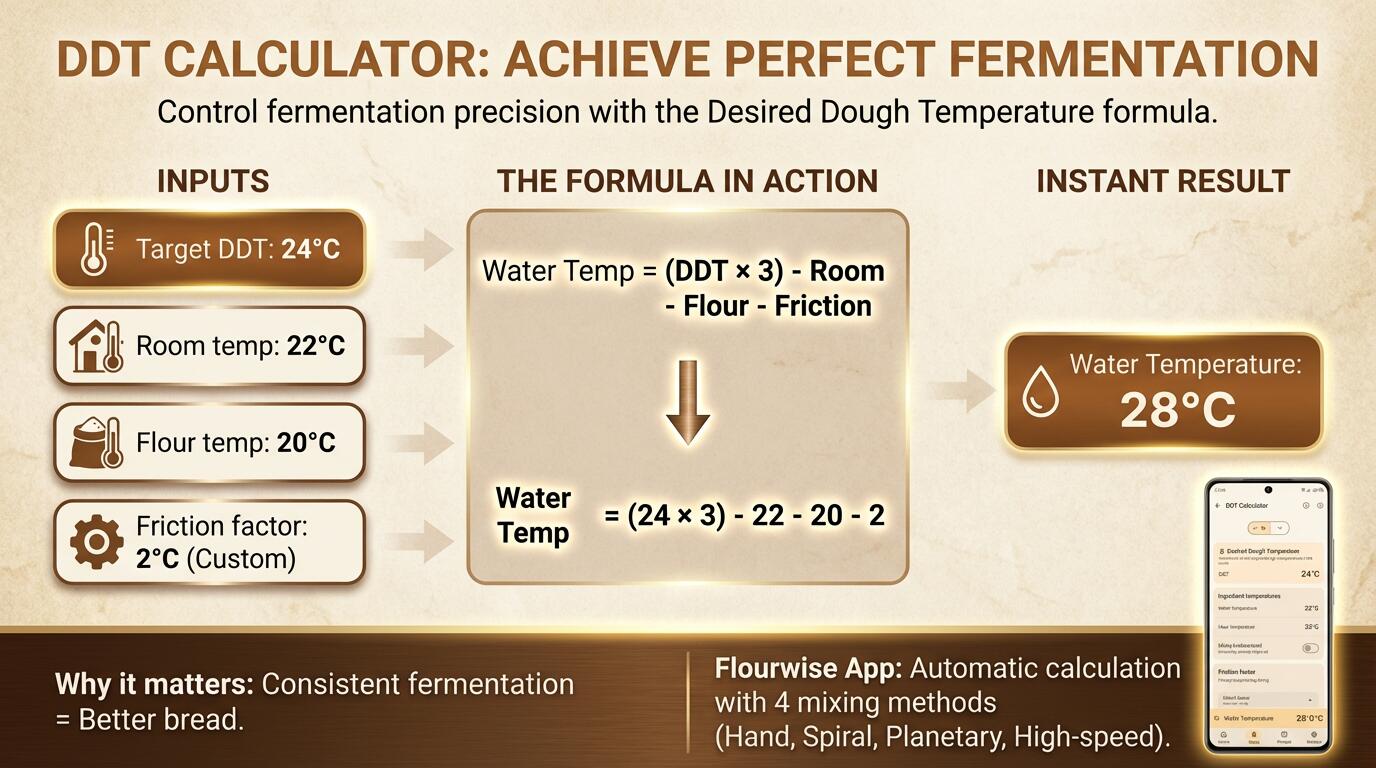
The formula multiplies the desired dough temperature by the number of variables that contribute heat to the dough, then subtracts each known temperature. The remainder is the water temperature that balances the equation.
- Without a preferment, four things determine dough temperature: water, room, flour and friction. The multiplier is 3 because we subtract three known values.
- With a preferment (poolish, biga, levain, sourdough starter), there's a fifth variable, so the multiplier becomes 4.
- Friction factor is the heat added by your mixer. King Arthur measures roughly 22-24°F (12-13°C) on a 7-quart KitchenAid after a 7-minute mix, and 8 minutes of hand mixing adds 6-8°F (3-4°C).
- The result is the water temperature you should use, whether straight from the tap, from the fridge, or mixed with ice to hit your target.
Why Dough Temperature Matters
Consistent dough temperature, consistent fermentation
Yeast and bacterial activity roughly doubles for every 8°C (14°F) rise. A 2°C swing in dough temperature can add or subtract 30-60 minutes of bulk fermentation time. Controlling the final dough temperature is the single most reliable way to get repeatable bread, more so than timers or visual cues.
- In winter, water from the tap is often 8-12°C (46-54°F). In summer it can reach 22°C (72°F). Same recipe, completely different fermentation.
- Flour stored in a cold pantry or next to a warm oven drifts 5-8°C (9-14°F) from room temperature without you noticing.
- Planetary stand mixers add significant friction heat. A 10-minute mix can raise dough temperature by 5-8°C (9-14°F) all by itself.
- Professional bakeries always measure final dough temperature. It's the baseline metric that makes bread reproducible day after day.
Friction Factor by Mixing Method
How much heat each mixing method adds to your dough
Friction factor is the heat generated by mixing. It depends on the mixer, speed, mixing time, and dough size. These are good starting values, but for best accuracy measure your own friction factor once (see the FAQ below).
| Mixing method | Friction (°C) | Friction (°F) | Notes |
|---|---|---|---|
| Hand mixing (~8 min) | 3-4 | 6-8 | King Arthur reference: 8 minutes total of slap-and-fold plus kneading. Shorter mixes add less. |
| Spiral mixer | 7-9 | 13-16 | Common in artisan bakeries. Gentler per minute than planetary mixers. |
| Planetary / stand mixer (KitchenAid) | 12-13 | 22-24 | King Arthur's measurement on a 7-quart KitchenAid: 3 min stir plus 4 min on speed 2 with dough hook. |
| High-speed commercial mixer | 11-22 | 20-40 | The Perfect Loaf references 20-40°F depending on mix time and speed. |
| Food processor | 10-15 | 18-27 | Very aggressive, so even short mix times add meaningful heat. |
These are reference ranges from King Arthur Baking and The Perfect Loaf. Friction varies with mixer model, speed, mix time, and dough size. For the most accurate result, measure your own friction factor once. Mix a test dough with known water, room, and flour temperatures, then take the final dough temperature. Friction = (Final dough × 3) − Water − Room − Flour.
Typical DDT by Dough Type
Recommended desired dough temperatures for common breads
Different doughs ferment best at different temperatures. Sourdough likes it cooler for extended bulk fermentation, while enriched doughs need a little more warmth to get the yeast going through all that butter and sugar.
| Dough type | DDT (°C) | DDT (°F) | Notes |
|---|---|---|---|
| Lean bread (baguette, pain de mie) | 24-26 | 75-78 | Standard bread dough with flour, water, salt, and yeast. |
| Sourdough bread | 23-25 | 73-77 | Cooler DDT slows fermentation for full flavour development. |
| Ciabatta / high-hydration | 24-25 | 75-77 | Warm enough for oven spring, cool enough to stay manageable. |
| Enriched bread (milk, egg) | 25-27 | 77-80 | Extra warmth helps the yeast push through fat and sugar. |
| Brioche | 20-22 | 68-72 | Very cool, so the butter stays solid during mixing. |
| Pizza dough (long cold ferment) | 22-24 | 72-75 | Cool starting dough for 24 to 72 hours of cold fermentation. |
| Pizza dough (same-day) | 24-26 | 75-78 | Warmer DDT for 4 to 6 hours of room temperature fermentation. |
| Rye bread | 26-28 | 78-82 | Rye doughs ferment faster at higher temperatures. |
These are starting points. Bakers in cold kitchens often aim higher, while warm summer kitchens call for a few degrees cooler.
Worked Example
Step-by-step DDT calculation
Let's say you want a dough temperature of 24°C (75°F). Your kitchen is 22°C (72°F), your flour is at 20°C (68°F), and you're using a KitchenAid stand mixer with a friction factor of 12°C (22°F). You're not using a preferment.
- Multiplier: no preferment, so we use 3.
- Step 1, DDT × 3: 24 × 3 = 72.
- Step 2, subtract room: 72 − 22 = 50.
- Step 3, subtract flour: 50 − 20 = 30.
- Step 4, subtract friction: 30 − 12 = 18.
- Water temperature: 18°C (64°F). Mix with water at that temperature and the dough will land at 24°C after mixing.
Common Problems & Fixes
When the calculator asks for an unreasonable water temperature
Sometimes the formula spits out a water temperature that's impossible or impractical. Here's how to adjust when that happens.
Calculator wants water below 0°C
Cause: Room and flour are too warm, or your friction factor is too high.
Fix: Chill the flour in the fridge for 30 minutes, lower the mixing speed, or use an ice bath for the water.
Calculator wants water above 45°C
Cause: Room and flour are very cold (winter kitchen).
Fix: Warm the flour to room temperature first, or wrap the mixer bowl in a warm towel. Never exceed 45°C, or you'll kill the yeast.
Final dough temperature is always too high
Cause: Friction factor is higher than you estimated.
Fix: Measure your mixer's actual friction (see the friction table note) and use that value instead of the default.
Final dough temperature is always too low
Cause: Longer mixing than expected, or water is warming the cold bowl.
Fix: Pre-warm the mixer bowl with warm water for 30 seconds before mixing. Or bump DDT up by 1°C.
Sourdough starter is very cold from the fridge
Cause: You added the starter straight from cold storage to the mix.
Fix: Let the starter warm up for 30 minutes on the counter before mixing, or enter its actual cold temperature in the preferment field.
Frequently Asked Questions
What is DDT (Desired Dough Temperature)?
How do I calculate water temperature for bread?
What is the friction factor?
How do I measure my own friction factor?
Why does the multiplier change from 3 to 4 when using a preferment?
What happens if my water ends up too cold or too warm?
Does DDT matter for sourdough?
What's the ideal dough temperature for pizza?
Do I need a thermometer to use this calculator?
Can I use this for rye or enriched doughs?
Calculators, timers, journal.
One free app.
Baking Guides — Bread, Pizza & Sourdough
 Bread Baking
 DDT Calculator Guide
How to calculate desired dough temperature for consistent fermentation — the formula, friction factor, and practical tips.
Read article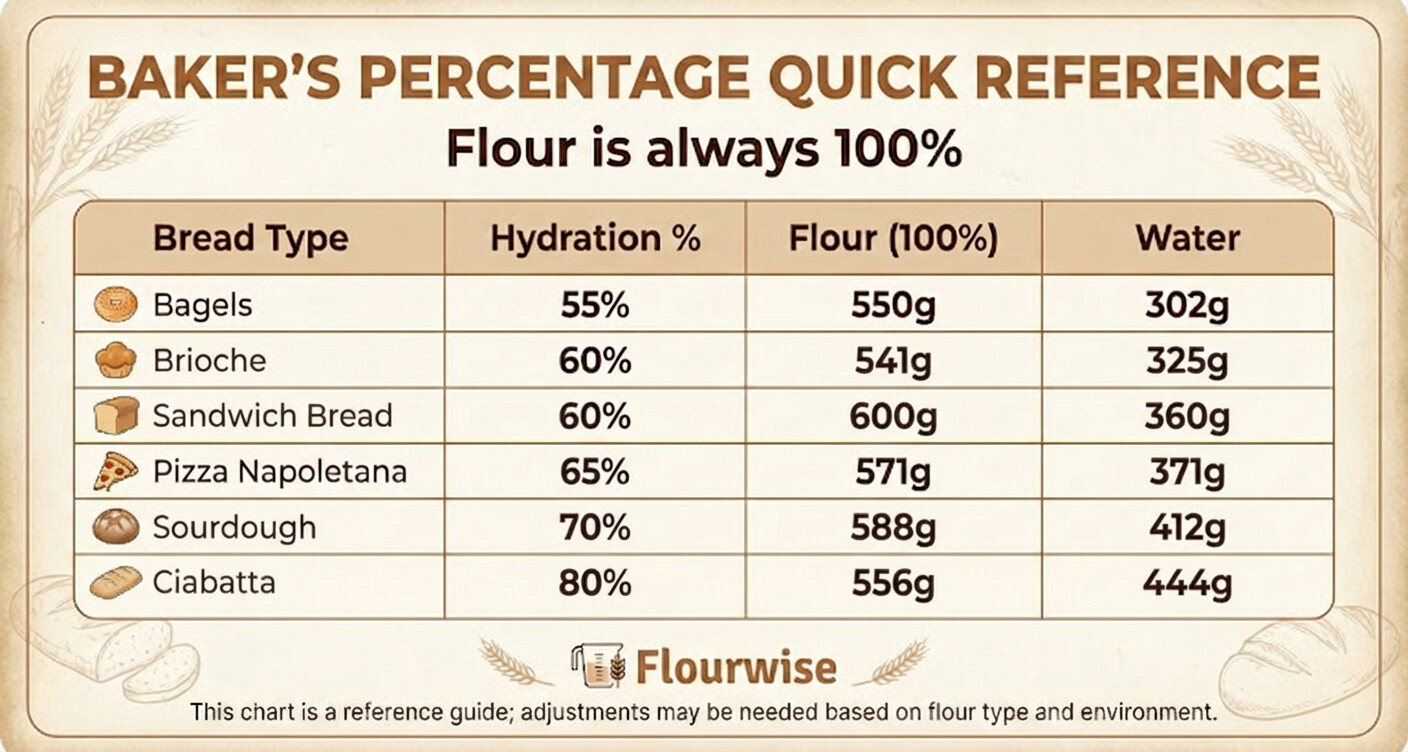 Bread Baking
 Baker's Percentage Chart
Complete reference chart for baker's percentage with common bread formulas, hydration ranges, and ingredient ratios.
Read article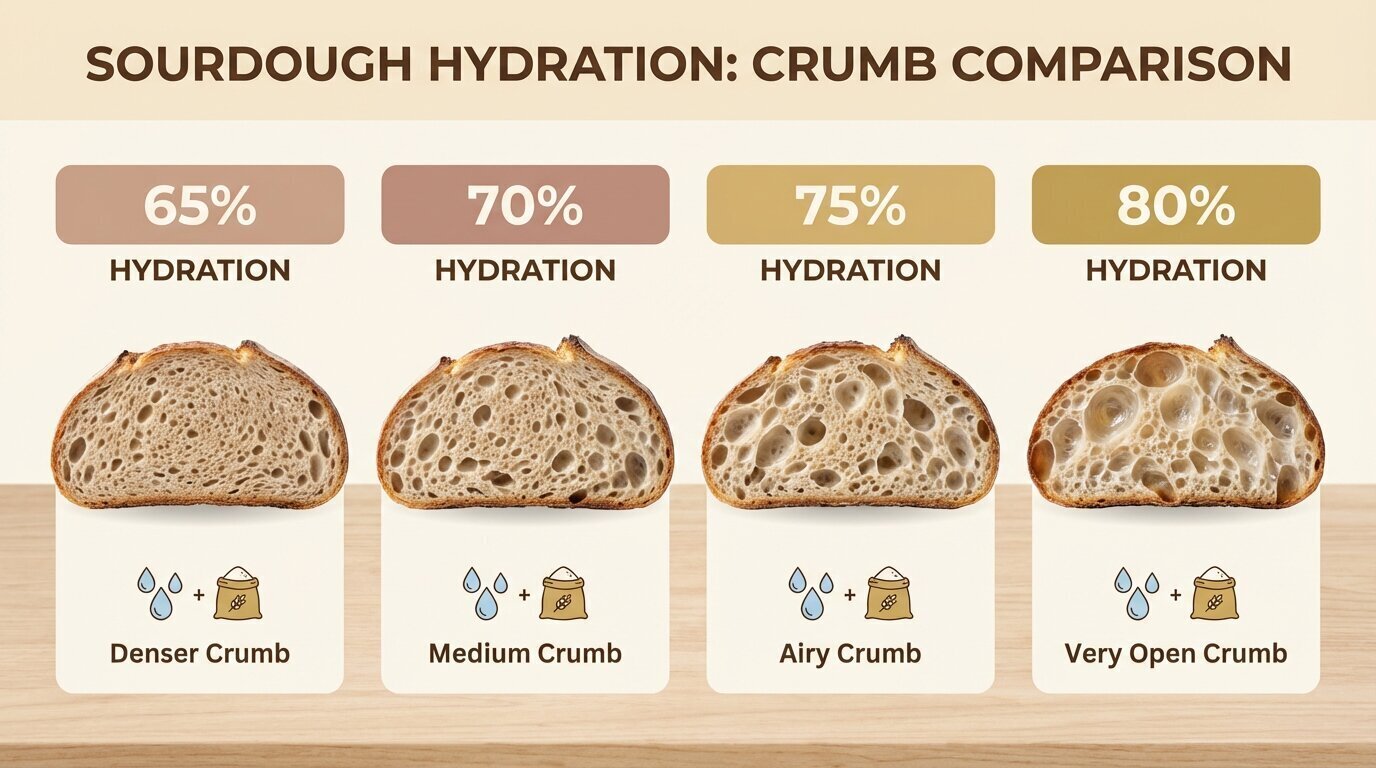 Hydration
 Sourdough Hydration Chart
Visual guide to sourdough hydration levels — what each percentage looks and feels like, from stiff to high-hydration doughs.
Read article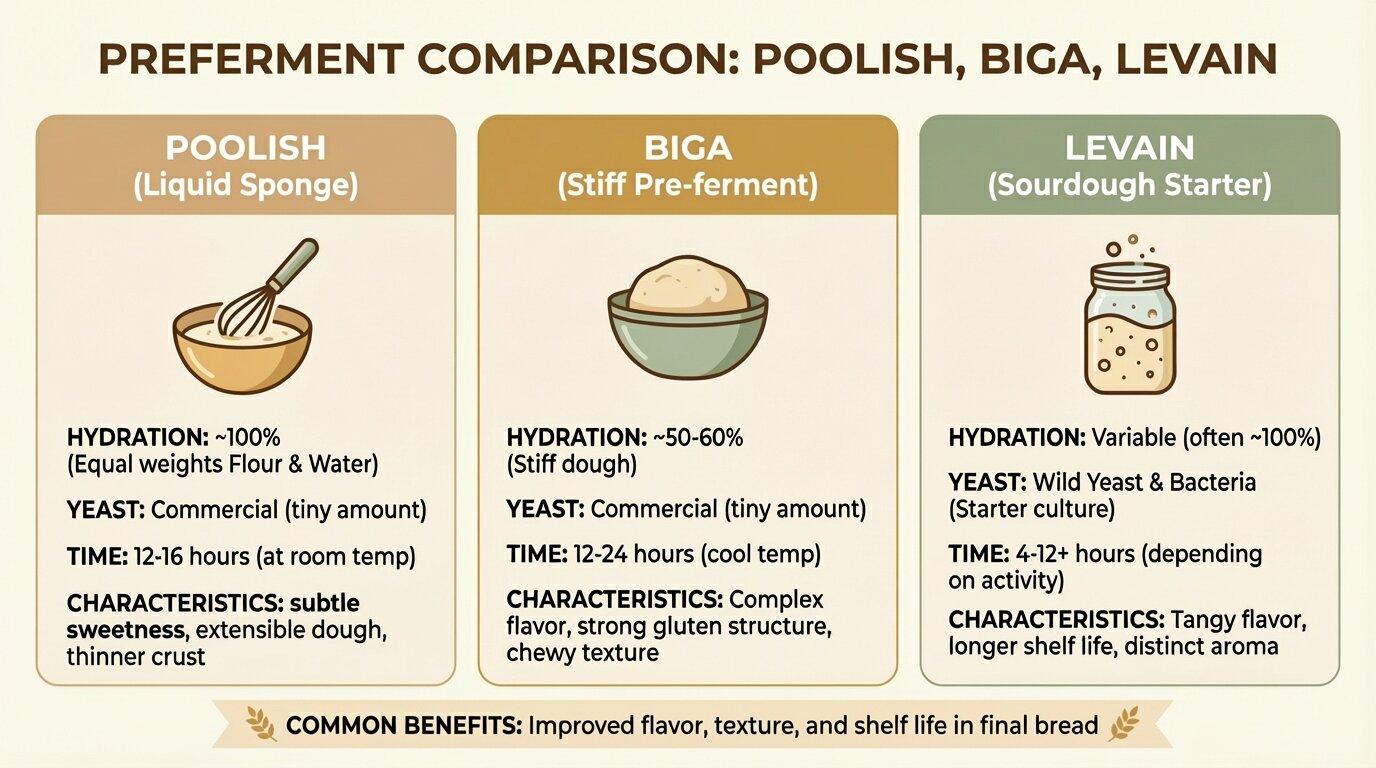 Hydration
 Poolish vs Biga vs Levain
Side-by-side comparison of the three major preferments — when to use each one, hydration ratios, and flavor differences.
Read article