Convert Fahrenheit to Celsius or Celsius to Fahrenheit instantly. Enter an oven temperature, pick your scale, and get the result — plus a full baking temperature conversion chart below.
Type a number above. We'll convert it to the other scale instantly.
Save your recipe, set baking timers & track every bake. Try Flourwise free →
Got your temperature? Now bake with confidence.
Save recipes, follow step-by-step baking mode with automatic timers, and keep a journal of every loaf. Free on Google Play.
Get Flourwise FreeFahrenheit to Celsius & Celsius to Fahrenheit Formula
The math behind the conversion
The conversion between Fahrenheit and Celsius uses a simple formula. The 32 offset accounts for the freezing point difference, and the 5/9 ratio reflects that a Celsius degree is 1.8× larger than a Fahrenheit degree.
- Water freezes at 32°F = 0°C and boils at 212°F = 100°C.
- Mental shortcut for baking: simply divide Fahrenheit by 2. For 350°F: 350 ÷ 2 = 175°C (exact: 176.7°C — off by less than 2°C). This works remarkably well for oven temperatures: 400°F ÷ 2 = 200°C (exact: 204°C), 450°F ÷ 2 = 225°C (exact: 232°C). Quick, accurate, and easy to remember.
- For oven temperatures, round to the nearest 5°C or 10°F. Ovens aren't precise enough for single-degree accuracy.
Fahrenheit to Celsius Conversion Chart (°F to °C)
Quick reference for common Fahrenheit to Celsius conversions
This chart covers the most commonly searched temperature conversions. Find your value and read across for the equivalent.
| Fahrenheit (°F) | Celsius (°C) | Common Use |
|---|---|---|
| 0°F | −17.8°C | Freezer |
| 32°F | 0°C | Water freezes |
| 68°F | 20°C | Room temperature |
| 100°F | 37.8°C | Body temperature (approx.) |
| 105°F | 40.6°C | Warm water for yeast proofing (ideal 38–43°C) |
| 150°F | 65.6°C | Low dehydrating / drying |
| 200°F | 93.3°C | Slow oven / warming |
| 212°F | 100°C | Water boils |
| 250°F | 121.1°C | Very low oven |
| 300°F | 148.9°C | Low oven / slow roasting |
| 325°F | 162.8°C | Moderate low (cookies, cake) |
| 350°F | 176.7°C | Standard baking temp |
| 375°F | 190.6°C | Moderate (pies, pastries) |
| 400°F | 204.4°C | Hot oven (bread, roasting) |
| 425°F | 218.3°C | High (pizza, focaccia) |
| 450°F | 232.2°C | Very hot (artisan bread) |
| 475°F | 246.1°C | Max home oven (pizza) |
| 500°F | 260°C | Pizza stone / steel |
| 550°F | 287.8°C | Broiler / max pizza |
Values are rounded to one decimal place. For exact conversions, use the calculator above.
Oven Temperature Chart for Baking
Baking temperatures for bread, pizza, pastries and more — °F and °C
Every bread and pastry has an ideal baking temperature. Too low and you get a pale, undercooked crust. Too high and the outside burns before the inside is done. This chart shows the standard oven temperature for the most common baked goods.
| Baked Good | °F | °C | Notes |
|---|---|---|---|
| Sourdough Bread | 450–475 | 230–245 | Preheat with Dutch oven. Reduce to 425°F (220°C) after 20 min. |
| Sandwich Bread | 350–375 | 175–190 | Lower temp for softer crust. Enriched doughs need lower heat. |
| Baguette | 450–475 | 230–245 | Steam for first 15 min. High heat = crispy crust. |
| Ciabatta | 425–450 | 220–230 | High hydration needs high heat for oven spring. |
| Focaccia | 425–450 | 220–230 | Generous olive oil. Bake until golden on top. |
| Pizza (home oven) | 475–550 | 245–290 | As hot as your oven goes. Use a pizza stone or steel. |
| Pizza (wood-fired) | 800–900 | 425–480 | Neapolitan pizza bakes in 60–90 seconds. |
| Bagels | 425–450 | 220–230 | Boil first, then bake. Flip halfway through. |
| Brioche | 350–375 | 175–190 | Rich dough browns fast. Watch carefully after 20 min. |
| Croissants | 375–400 | 190–205 | Start higher for puff, reduce to finish baking through. |
| Cookies | 325–375 | 165–190 | Lower = chewy. Higher = crispy. Check at minimum time. |
| Cake | 325–350 | 165–175 | Even, moderate heat. Don't open oven for first 20 min. |
| Pie crust | 375–425 | 190–220 | Blind bake at higher temp. Fill and finish at lower. |
| Banana bread | 325–350 | 165–175 | Low and slow. Dense batter needs time to cook through. |
All temperatures assume a conventional (non-convection) oven. For convection/fan ovens, reduce by 25°F or 20°C — see the section below.
Fahrenheit, Celsius & Gas Mark: Oven Scales Explained
How oven temperature scales differ around the world
Recipes from different countries use different temperature scales. Here's how they compare and how to convert between them.
Fahrenheit (°F)
Used in the United States and a few Caribbean nations. American recipes almost always list oven temperatures in Fahrenheit. Common baking range: 300–500°F.
Celsius (°C)
Used in Europe, Australia, Asia, and most of the world. Also called Centigrade. Common baking range: 150–260°C. Scientific standard.
Gas Mark
An older British system still found in UK and Australian recipes. Gas Mark 1 = 275°F (135°C), and each mark adds roughly 25°F (14°C). Gas Mark 4 = 350°F (180°C) is the most common baking temperature.
Conventional to Convection Oven Temperature Conversion
How to convert oven temperature for a fan oven
A convection (fan-assisted) oven circulates hot air with a fan, cooking food faster and more evenly. Because of this, convection ovens run hotter in practice — you need to reduce the temperature or shorten the baking time.
- Reduce temperature by 25°F (about 15°C) compared to a conventional oven recipe. In Europe, the standard reduction for fan ovens is 20°C (e.g. a recipe calling for 200°C becomes 180°C with convection).
- Alternatively, keep the same temperature but reduce baking time by about 25%.
- Don't do both — pick one adjustment, not both at once.
- Fan ovens are great for cookies and pastries (even browning) but can dry out bread crusts faster.
Frequently Asked Questions
What is 350°F in Celsius?
What is 180°C in Fahrenheit?
What is 400°F in Celsius?
What is 200°C in Fahrenheit?
How do I convert Fahrenheit to Celsius?
How do I convert Celsius to Fahrenheit?
What temperature should I bake bread at?
Do I need to adjust temperature for a convection oven?
What is Gas Mark 4 in Fahrenheit and Celsius?
From recipe to fresh loaf — all in one app.
Save your recipes, set step-by-step timers for every stage, and log your bakes in a personal journal. Free on Google Play.
Get Flourwise FreeBaking Guides — Bread, Pizza & Sourdough
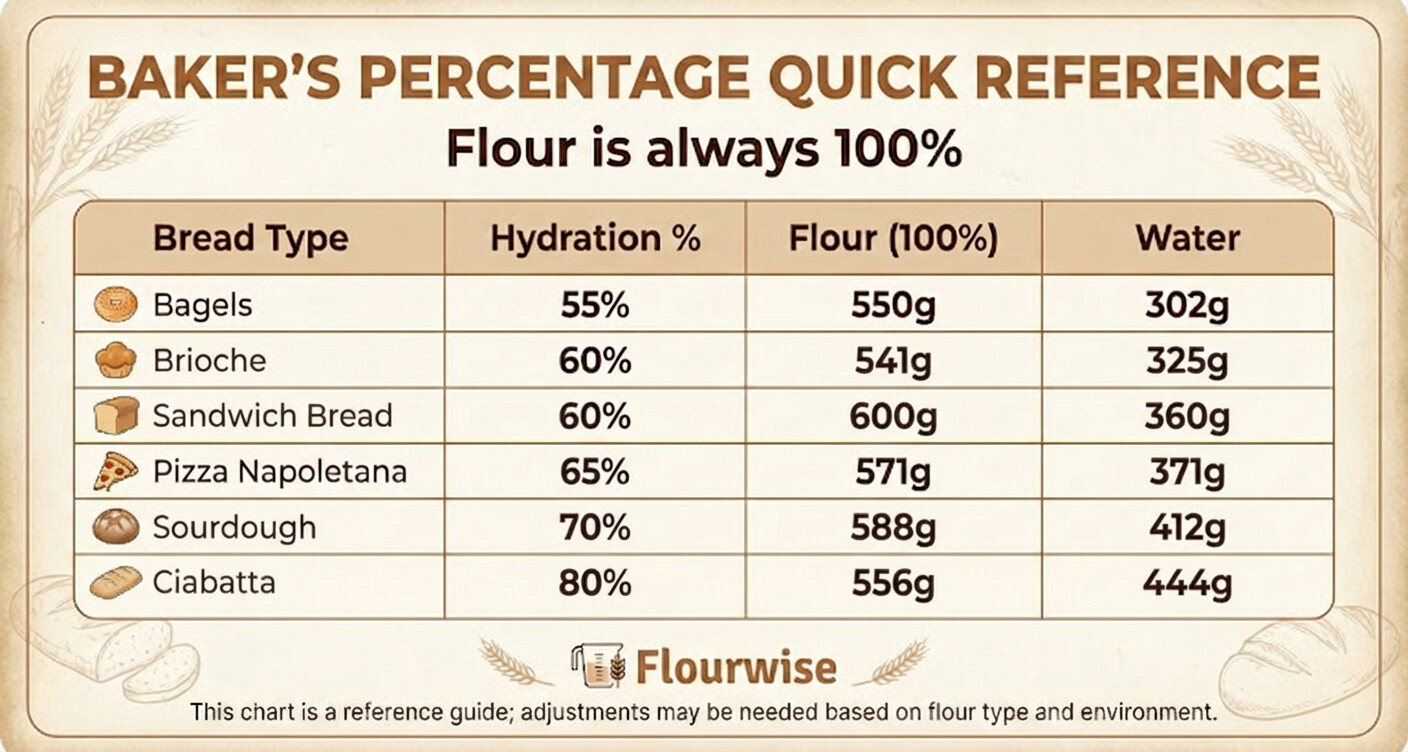 Bread Baking
 Baker's Percentage Chart
Complete reference chart for baker's percentage with common bread formulas, hydration ranges, and ingredient ratios.
Read article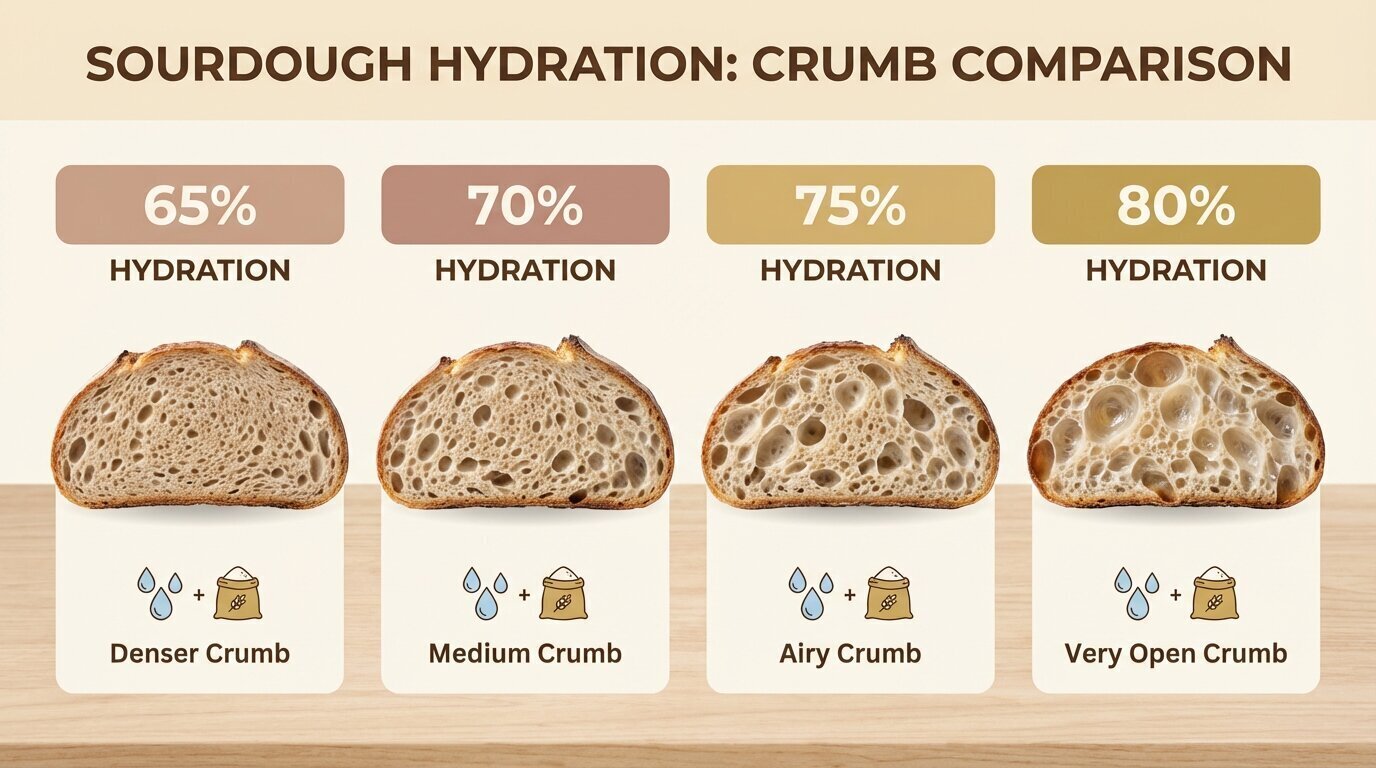 Hydration
 Sourdough Hydration Chart
Visual guide to sourdough hydration levels — what each percentage looks and feels like, from stiff to high-hydration doughs.
Read article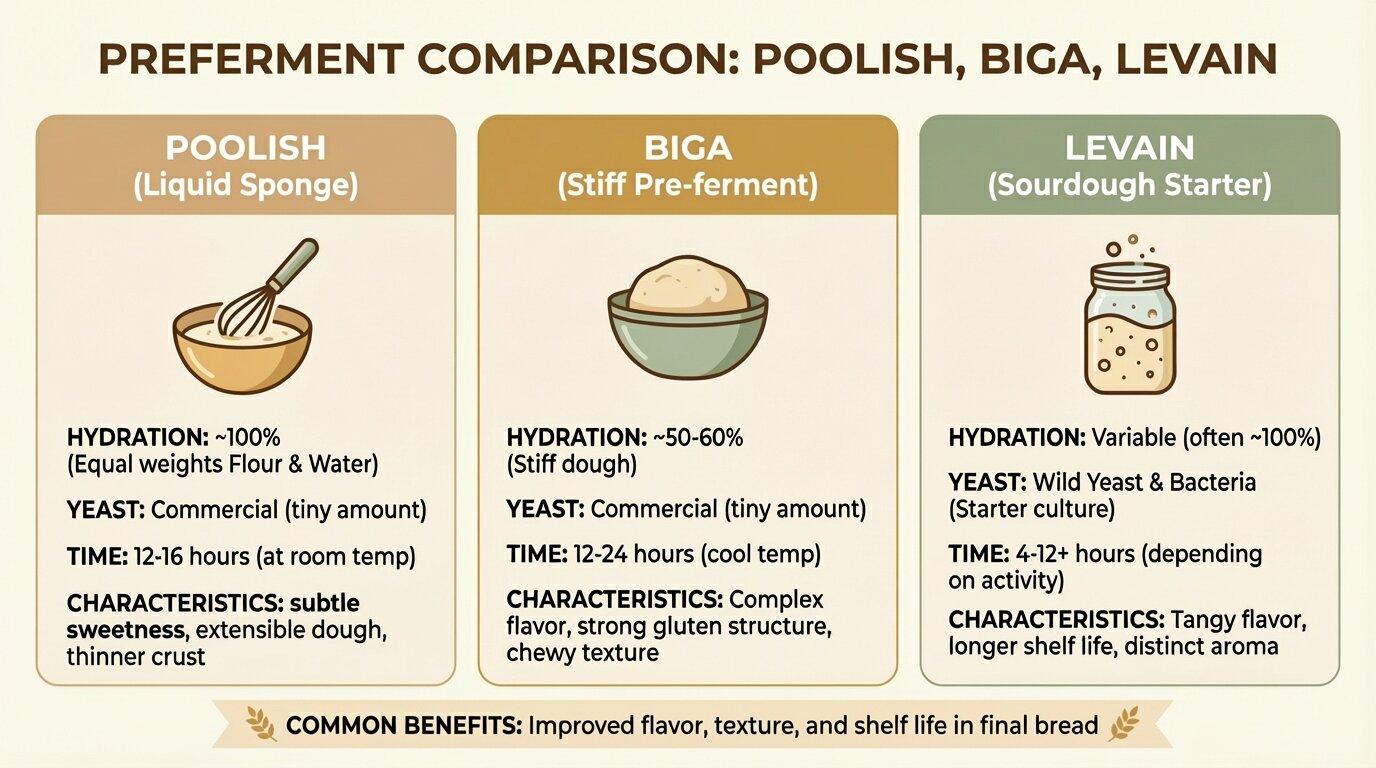 Hydration
 Poolish vs Biga vs Levain
Side-by-side comparison of the three major preferments — when to use each one, hydration ratios, and flavor differences.
Read article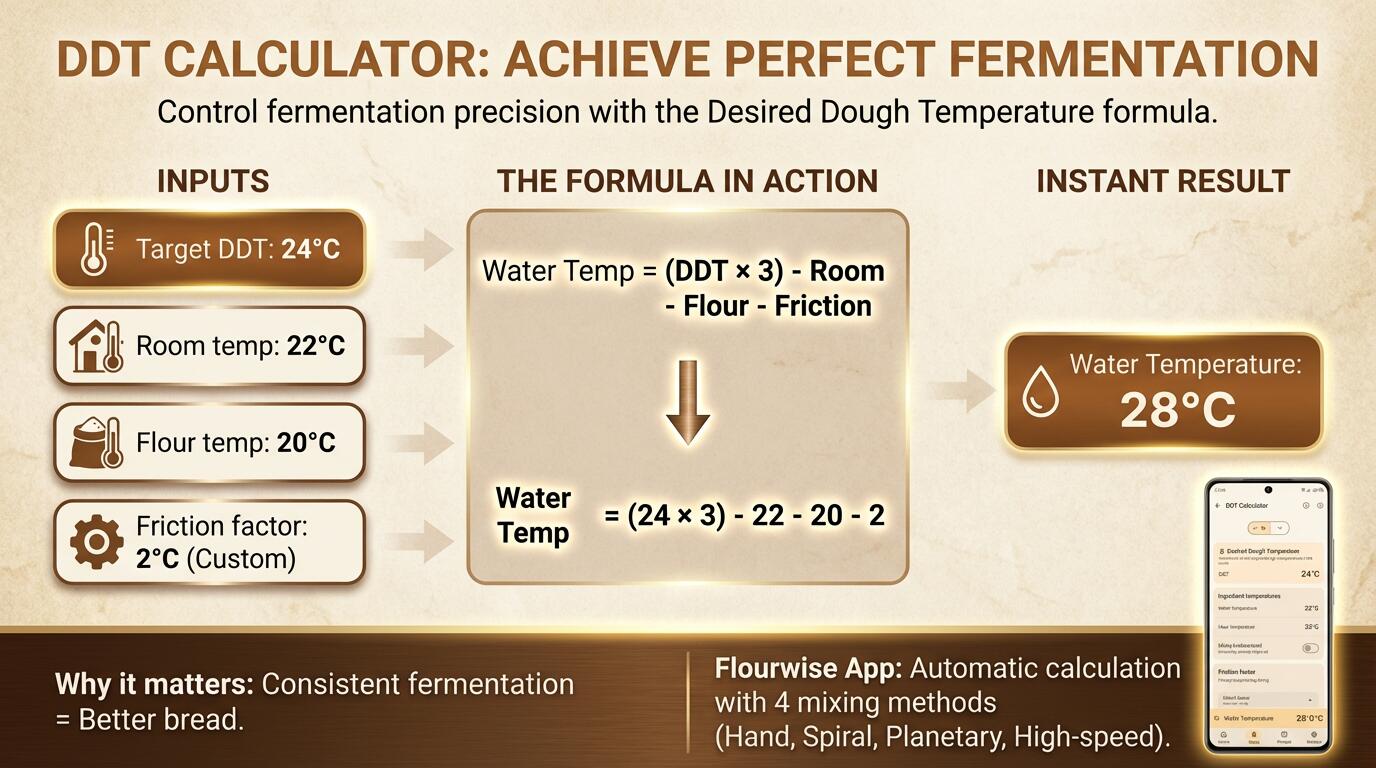 Bread Baking
 DDT Calculator Guide
How to calculate desired dough temperature for consistent fermentation — the formula, friction factor, and practical tips.
Read article