Fresh Yeast to Dried Yeast Conversion Calculator
Convert between fresh yeast, active dried yeast and instant yeast. Enter an amount, pick your type, and get instant results.
Choose the yeast you have. We'll show the other two formats in the same unit.
Baker's %, pizza dough & sourdough — all in one free app. Get Flourwise Free →
Yeast converter in your pocket
Flourwise has a built-in yeast converter, baker's percentage calculator, pizza dough calculator, and step-by-step baking mode — all in one free app.
Get Flourwise FreeFresh Yeast to Dried Yeast Ratio
The simple rule for switching between fresh, active dried, and instant yeast
The rule is simple: fresh yeast ÷ 2 = active dried yeast, fresh yeast ÷ 3 = instant. So 42g fresh yeast is equivalent to 21g active dried or 14g instant yeast. These ratios reflect the difference in moisture content and cell concentration — fresh (wet) yeast contains about 70% water, which is why you need more of it by weight.
- Fresh yeast is used in larger quantities because of its high water content.
- Active dried usually needs blooming before mixing into the dough.
- Instant yeast can go straight into flour and is best reduced for long cold fermentation.
Fresh to Dried Yeast Conversion Chart
Fresh yeast, active dried yeast, and instant yeast equivalents
Read across the row that matches your original recipe, then swap in the yeast type you have on hand. Each row shows the exact equivalent amount — no other changes to your dough formula needed.
| Fresh Yeast | Active Dried Yeast | Instant Yeast |
|---|---|---|
| 1g | 0.5g | 0.3g |
| 5g | 2.5g | 1.7g |
| 7g | 3.5g | 2.3g |
| 10g | 5g | 3.3g |
| 21g | 10.5g | 7g |
| 42g | 21g | 14g |
| 100g | 50g | 33.3g |
This chart is the quickest way to check the conversion before mixing, especially when a recipe uses cubes of fresh (wet) yeast and you only have sachets of dried yeast at home.
Fresh, Dried & Instant Yeast: Types Explained
How each yeast format behaves in real baking
Knowing the ratio is only half the job. The other half is understanding how each yeast type behaves in storage, in mixing, and over a long fermentation.
Fresh Yeast (Compressed / Wet Yeast)
Also called cake yeast, compressed yeast, or wet yeast. It has the mildest flavor and gives bread a slightly sweeter, more complex taste. Professional bakers often prefer it for its reliable and gentle leavening. It has a high moisture content (~70% water) which is why you need more of it by weight — and why it is not a direct 1:1 equivalent to dried yeast.
Active Dried Yeast
Also known simply as dried yeast. It consists of granulated yeast with a protective coating of dead yeast cells. It must be dissolved ("proofed") in warm water (38-43°C) for 5-10 minutes before use to activate it. Slightly slower to start working than instant yeast, but produces identical results once active.
Instant Yeast (Rapid-Rise / Fast-Acting)
Also called rapid-rise, quick-rise, fast-acting yeast, or bread machine yeast. The granules are smaller and more porous than active dried, so they dissolve on contact with dough — no proofing needed. It works about 50% faster than active dried yeast. Some brands (like SAF Gold) are osmotolerant, designed for sweet and enriched doughs.
Frequently Asked Questions
How to convert fresh yeast to active dried yeast?
Can I use active dried yeast as a fresh yeast substitute?
Why does the conversion ratio work?
Do I need to proof instant yeast?
How much yeast should I use per 500g of flour?
Can I use sourdough starter instead of commercial yeast?
Does yeast type affect the taste of bread?
How much dried yeast equals fresh yeast? (1 cake conversion)
How much yeast is in a standard packet?
Ready to bake? Take the full toolkit.
Baker's percentage, sourdough starter, pizza dough, DDT calculator, and step-by-step baking mode — all free, all in one app.
Get Flourwise FreeBaking Guides — Bread, Pizza & Sourdough
 Bread Baking
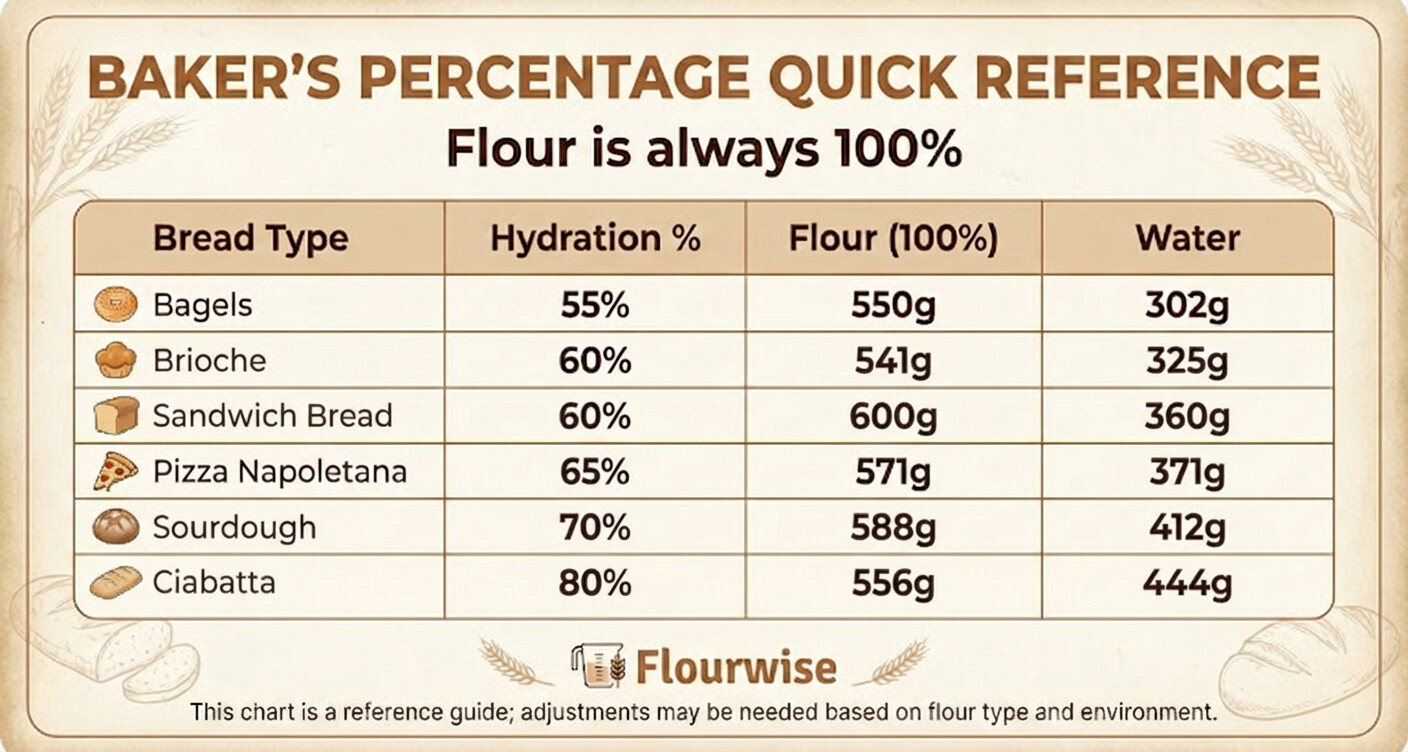
 Baker's Percentage Chart
Complete reference chart for baker's percentage with common bread formulas, hydration ranges, and ingredient ratios.
Read article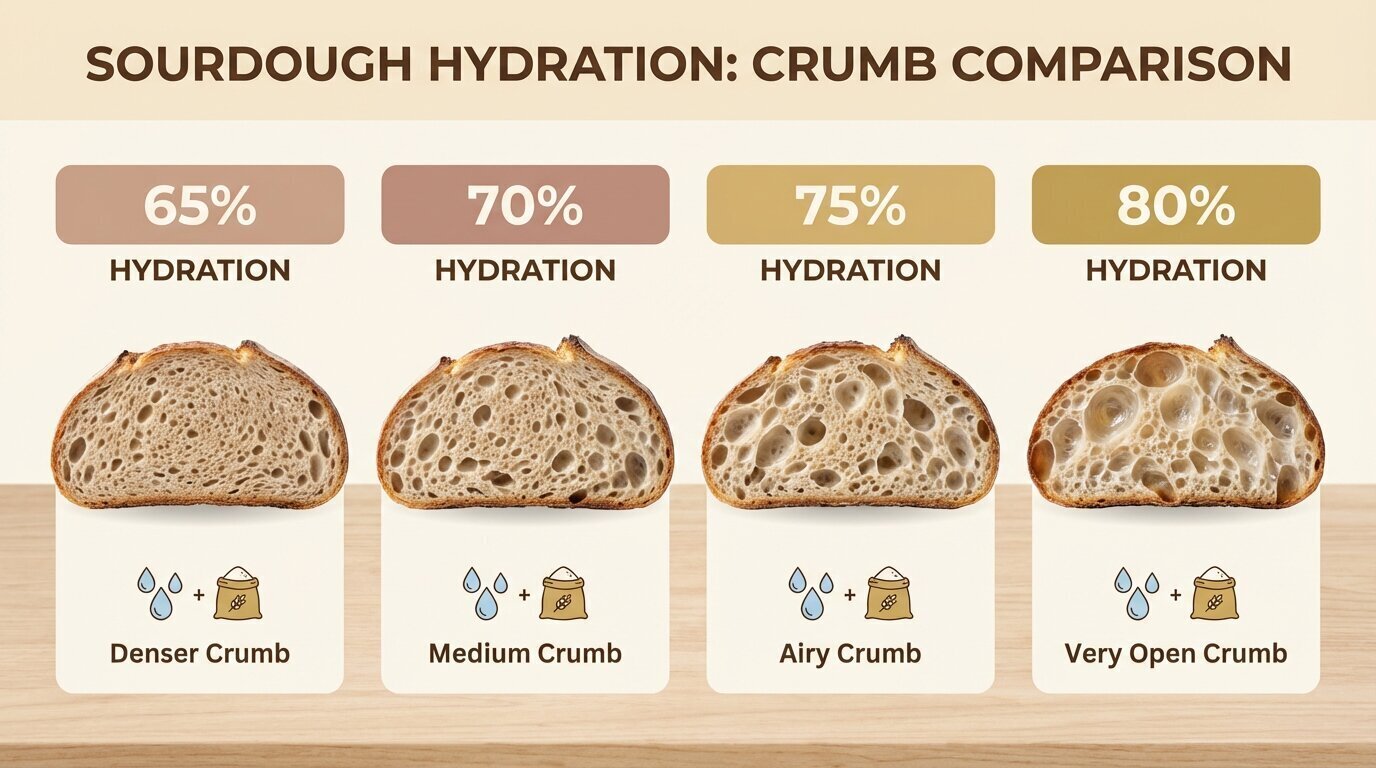 Hydration
 Sourdough Hydration Chart
Visual guide to sourdough hydration levels — what each percentage looks and feels like, from stiff to high-hydration doughs.
Read article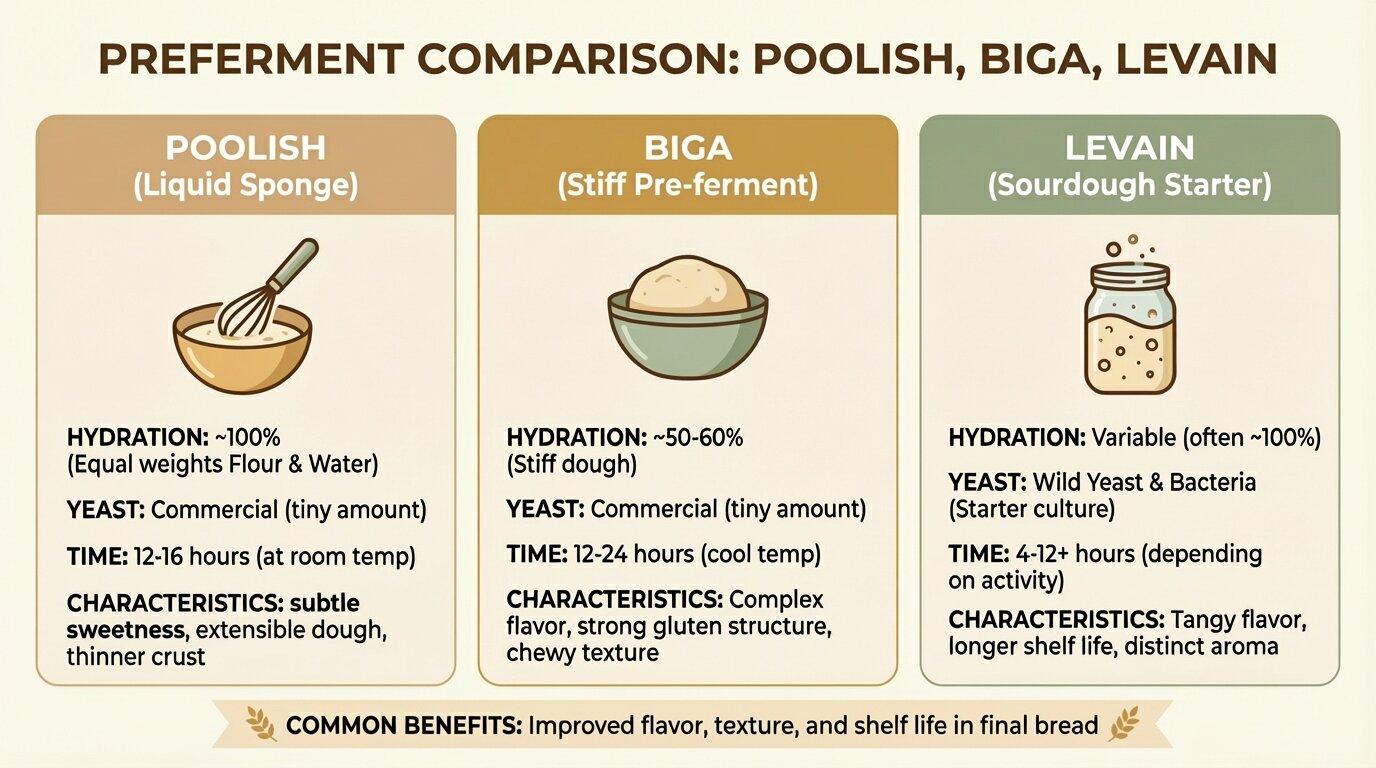 Hydration
 Poolish vs Biga vs Levain
Side-by-side comparison of the three major preferments — when to use each one, hydration ratios, and flavor differences.
Read article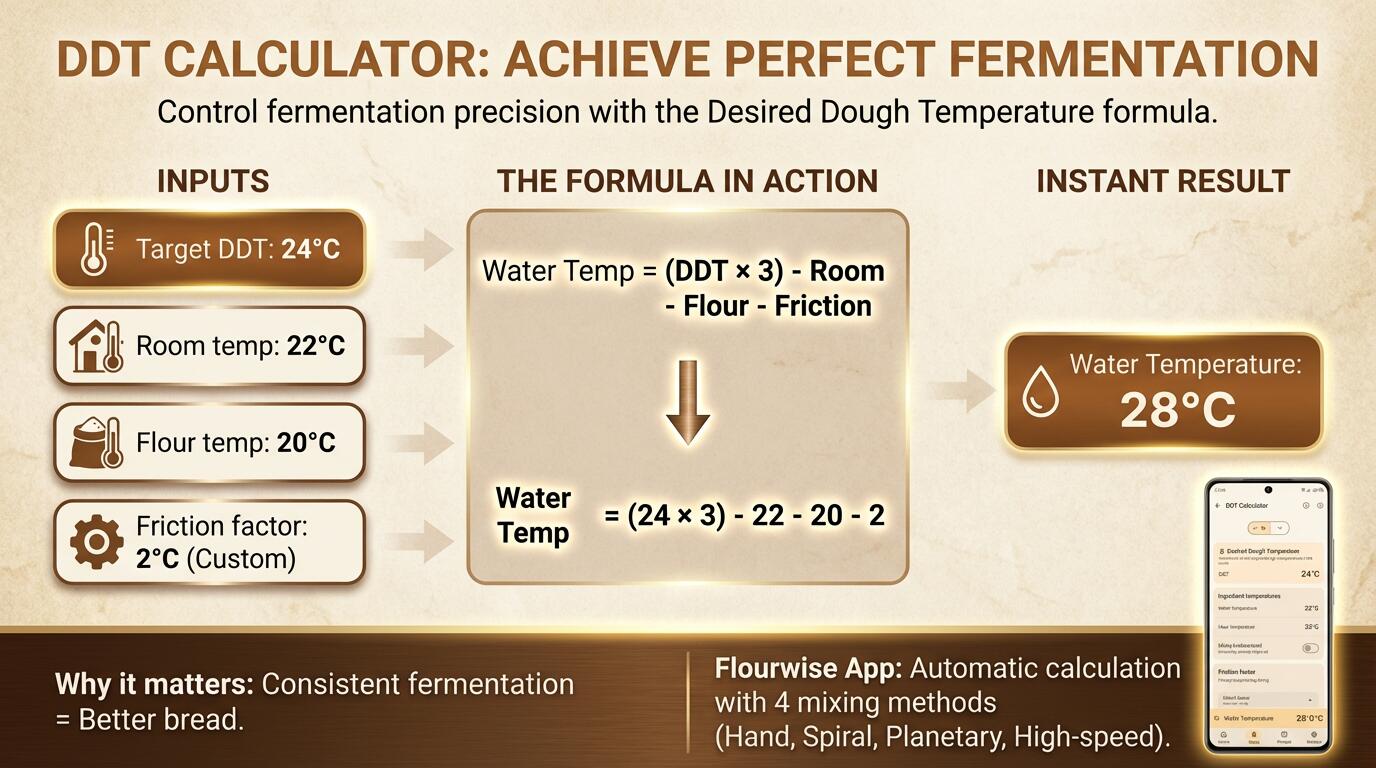 Bread Baking
 DDT Calculator Guide
How to calculate desired dough temperature for consistent fermentation — the formula, friction factor, and practical tips.
Read article